Wildfire Embers and Your Roof: Protecting Your Home
Wildfire embers can ignite a roof from a mile away. Here's how Prescott homeowners harden roofs against ember attack and what to do after a fire.
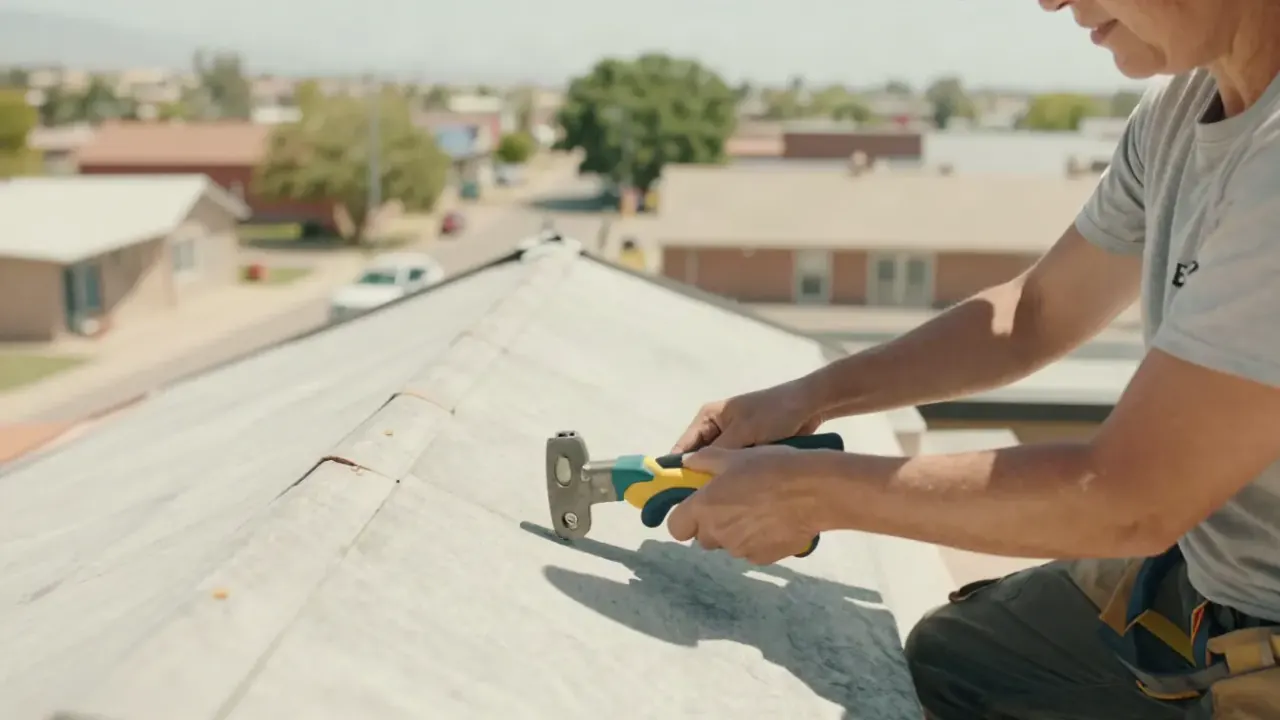
Wildfire embers roof protection in Prescott AZ starts with understanding that most homes lost to wildfire are ignited by embers, not the flame front. Embers can travel more than a mile on the wind and slip into roof vents, gutters, and the gaps around flashing, smoldering for 20 to 40 minutes before flames show. This post explains why embers are the real threat here in the Prescott Basin, which roof materials hold up, and the specific steps we take to harden a roof before fire season.
Why Wildfire Embers Threaten Your Roof
Wildfire embers threaten your roof because they land in the same places wind-driven rain does - valleys, vents, and the dead-end gaps where two roof planes meet. A burning ember the size of a thumbnail carries enough heat to ignite dry pine needles, shredded shingles, or the sawdust that collects behind a chimney. Once one catches, the fire climbs into the attic through the roof deck.
Prescott sits at 5,400 feet in a ponderosa pine belt that dries out from April through June. Relative humidity drops below 15% on many afternoons, and sustained winds of 15 to 25 mph are routine. Those are the exact conditions that turn a single ember into a structure fire. The 2013 Doce Fire and the 2021 Crooks Fire both pushed embers into neighborhoods well inside city limits.
Roofs fail during ember storms for three reasons: combustible debris on the surface, openings that let embers inside, and materials that crack or curl under heat. We see all three on the same roof more often than you would think. If you want a full picture of your own risk, a Roof Inspections Prescott AZ visit gives you a written list of every ember entry point we find.
How Wildfire Embers Damage Roofs in Prescott AZ
Wildfire ember roof damage in Prescott AZ usually shows up in four places: the roof-to-wall intersection, attic vents, skylight curbs, and the gutter line. Embers pile up against the wall like snow, and if the siding or flashing there is wood or unsealed metal, they can burn straight through.
The four entry points we check first
- Gable and soffit vents: standard 1/8-inch mesh lets embers through. We swap to 1/16-inch or 1/8-inch ember-resistant mesh.
- Roof-to-wall flashing: a 1/8-inch gap here is enough. Embers wedge in and smolder against the sheathing.
- Skylight and chimney curbs: cracked sealant around a curb is a direct path into the attic.
- Valleys and gutters: pine needle accumulation turns a gutter into a fuel tray.
Heat damage is the slower problem. Asphalt shingles begin to soften around 150°F and lose their granules by 200°F. A roof that has already taken 15 Prescott summers is more vulnerable because the mat is brittle and the seal strips are failing. That is why we often pair ember hardening with Shingle Roof Repair Prescott AZ - replacing lifted or missing shingles before fire season is cheaper than replacing the whole deck after.
Metal roofs handle embers better, but they have their own weak points. Fastener gaskets dry out and pull away, and the panels expand and contract 1/4 inch or more across a 20-foot run. A loose panel edge is an ember trap. If you have a metal roof, a Metal Roof Repair Prescott AZ inspection before June will catch those gaskets while they are still cheap to replace.
Ember-Resistant Roof Materials for Arizona Homes
Ember-resistant roof materials in Arizona are rated by ASTM E108 and carry a Class A fire rating, but Class A does not mean ember-proof. It means the assembly passed a test with a burning brand on top. The gaps and penetrations still matter.
Here is how the common Prescott roof types stack up:
- Class A asphalt shingles: 15 to 25 years in our climate, $9,000 to $16,000 for a typical 2,000 sq ft roof in 2026. Good ember resistance if the field is intact.
- Concrete or clay tile: 40 to 50 years, $18,000 to $30,000. The tile itself will not burn, but the underlayment and battens can.
- Standing-seam metal: 40 to 60 years, $20,000 to $35,000. Best ember performance when panels are tight and gaskets are fresh.
- Modified bitumen flat roofs: 15 to 20 years, $7,000 to $12,000. Vulnerable at seams and drains.
Tile and metal are the two materials we recommend most often for homes backing up to the national forest. Both give you a non-combustible surface, and both can be detailed with ember-resistant vents and flashing. For tile homes, the underlayment is the weak link - a Tile Roof Repair Prescott AZ assessment will tell you whether the underlayment is still doing its job or has dried out to the point where an ember can reach the deck.
How to Protect Your Roof from Wildfire Embers
Protect your roof from wildfire embers by closing every opening, removing every fuel source, and keeping the surface intact. That is the whole strategy. The details are what matter.
1. Clear the roof and gutters
Pine needles, oak leaves, and pine cones are the fuel. On a 2,000 sq ft roof, we routinely pull 5 to 15 pounds of debris out of the valleys and gutters. Do this twice a year - once in late April before fire season, once in October after the first winds.
2. Seal the penetrations
Every pipe boot, vent, and skylight curb needs a continuous seal. We use fire-rated sealant and metal flashing, not caulk alone. A Flashing Repair Prescott AZ visit is the fastest way to close the gaps that embers find.
3. Upgrade vent screens
Replace 1/4-inch bird screen with 1/16-inch or 1/8-inch ember-resistant mesh. This is a $150 to $400 job depending on how many vents you have, and it is one of the highest-value upgrades you can make.
4. Keep the roof surface intact
Lifted shingles, cracked tiles, and open seams all give embers a place to sit. Repair them before May. If your roof is within 30 feet of a tree canopy, this is not optional.
5. Maintain the defensible space below
Embers that land on the roof often start from a burning bush or mulch bed against the house. Keep the first 5 feet around the foundation non-combustible - gravel, stone, or irrigated lawn. Trim tree limbs so the lowest branch is 10 feet off the ground.
What to Watch Out For: Common Mistakes
The most common mistake we see is treating ember protection as a one-time project. It is not. Ember-resistant mesh clogs with pine needles, sealant shrinks, and gaskets dry out. Without an annual check, your protection quietly fails.
Other mistakes:
- Assuming a Class A roof is safe. The rating covers the material, not the installation or the debris on top of it.
- Sealing vents completely. You need airflow. Blocking a vent to keep embers out can cause attic moisture problems and void your warranty.
- Ignoring the underlayment on tile roofs. The tile will survive; the underlayment underneath may already be gone.
- Skipping the roof-to-wall detail. This is the single most common ignition point on homes we inspect after a near-miss.
- Waiting until you see smoke. By then, the ember has already been in the attic for 20 minutes.
We also see homeowners spend $20,000 on a new metal roof and then leave the old wood shake on the guest house. Embers do not care which structure is newer. If you have outbuildings, they need the same treatment.
When to Call a Professional
Call a professional when you cannot see the whole roof, when you find charred debris in the gutters, or when your roof is more than 15 years old. Those are the three situations where a visual check from the ground is not enough.
We get on the roof, photograph every penetration, and give you a written list of what needs attention before fire season. If you have already had a close call, we can also document ember damage for your insurance claim. Our team at Prescott Roof Repair handles ember hardening, flashing repair, and full roof replacement across the Prescott area. We will tell you what actually needs to be done and what can wait.
Frequently Asked Questions
How do wildfire embers damage roofs in Prescott AZ?
Embers land in gutters, valleys, and vents, then smolder for 20 to 40 minutes. They ignite dry pine needles and cracked shingles, and can slip through gaps around flashing into the attic. Most roof ignitions happen after the flame front has already passed.
How can I protect my roof from wildfire in Prescott?
Clear debris twice a year, upgrade vent screens to 1/16-inch mesh, seal every penetration with fire-rated flashing, and repair lifted shingles or cracked tiles before May. Keep the first 5 feet around your foundation non-combustible and trim tree limbs to 10 feet.
What roofing materials are ember resistant in Arizona?
Class A asphalt shingles, concrete and clay tile, and standing-seam metal all resist embers when installed correctly. Tile and metal are the strongest choices for homes near the forest. The underlayment and flashing details matter as much as the surface material.
Does insurance cover wildfire roof damage in Prescott?
Most Prescott homeowner policies cover wildfire damage, including ember ignition, minus your deductible. You will need documentation - photos, a contractor report, and a dated inspection. We provide that documentation as part of our post-fire assessment.
How often should I have my roof checked for ember risk?
Once a year, ideally in April before fire season. If your home backs up to the national forest or has heavy pine needle accumulation, check again in October. Ember-resistant mesh and sealant both degrade over 12 to 18 months.
Get Help with Roof Repair in Prescott
Ember hardening is not a one-time job, and it is not something you can judge from the driveway. We inspect the whole roof, close the gaps, and show you what we found.
Call Prescott Roof Repair at (928) 260-9145 to schedule your pre-season roof assessment. We serve Prescott, Prescott Valley, Chino Valley, and the surrounding communities.